 G
Global Registry of Biorepositories
Clearing house of information on biological collections in biorepositories
About Global Registry of Biorepositories
The Global Registry of Biorepositories (GRBio) is a foundational online metadata resource for the scientific community, providing a centralized directory of biological collections, the institutions housing them, and associated staff. Its core function is to assign globally unique and persistent identifiers to these entities, which is critical for ensuring that citations and references to physical specimens in research are accurate and unambiguous over time. The registry serves a wide range of clients, including researchers, natural history museums, herbaria, and other biorepositories, by offering detailed information such as contact details, collection characteristics, and policies regarding access and loans.
GRBio was initially developed by the Consortium for the Barcode of Life (CBOL) and released in June 2013 to provide an authoritative reference for linking voucher specimens with DNA barcode records. Management was transferred to Scientific Collections International (SciColl) in December 2013, which is hosted by the Smithsonian Institution. The platform represents a significant collaborative achievement, merging several earlier registries, including Biorepositories.org from CBOL, the Biodiversity Collections Index from the Royal Botanic Garden Edinburgh, and the Index Herbariorum from the New York Botanical Garden, into a single, comprehensive clearinghouse. This consolidation created the first comprehensive directory for biological collections.
The service operates as a community-curated online portal where users can submit and update records, which are then reviewed by moderators before publication. The platform is built on a Drupal-based database and provides both basic and advanced search functionalities. A key milestone in its history was the 2019 migration of the Global Registry of Scientific Collections (GRSciColl)—an extension of GRBio covering all scientific disciplines—to become part of the Global Biodiversity Information Facility (GBIF) infrastructure. This move integrated GRBio's data into GBIF's broader network, enhancing links between collection metadata and the vast repository of specimen records available through GBIF.org. As a government-funded, open-data infrastructure, GBIF does not operate on a commercial revenue model; its services, including the registry, are provided as a public good to support science and sustainable development.
Source: Dealroom company data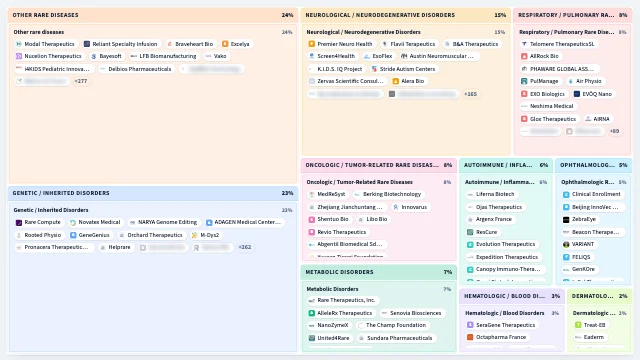
News
Open roles
Global Registry of Biorepositories in the New York City ecosystem
The Global Registry of Biorepositories office with the hot startups, most funded companies and investors around it. Hover or tap a pin.
Dealroom maps whole ecosystems like this one for cities, regions and governments. See the ecosystem platform →
Investors
From Dealroom's funding and investor records, grouped by the round each investor first entered.
Series A1 investor entered at this stage
 The National Institute of Mental Health
Source: Dealroom Talent Intelligence.
Global footprint
Market sentiment
An AI-synthesised read of the highest-engagement posts about Global Registry of Biorepositories on X, ranked by likes and reposts, corporate channels excluded.
Reading the room on X — pulling top posts and synthesizing themes…
Source: X recent search ranked by engagement (likes + retweets) · Synthesis by Claude · Cached for 1 hour
See Global Registry of Biorepositories on the full Dealroom platform
Live deal flow, founder pedigree, hiring signals, revenue trajectory, and the full cap table.